Free Beginner Guide
What Is Tai Chi Walking? Your Complete Guide to Getting Started
Tai chi walking is a slow, mindful stepping practice—sometimes called taichi walking or walking tai chi—that you can do indoors or outdoors with no equipment. This guide explains what it is, how to do it step by step, and how to build a simple weekly plan.
- Indoor-friendly
- No special shoes
- Learn in 8 steps
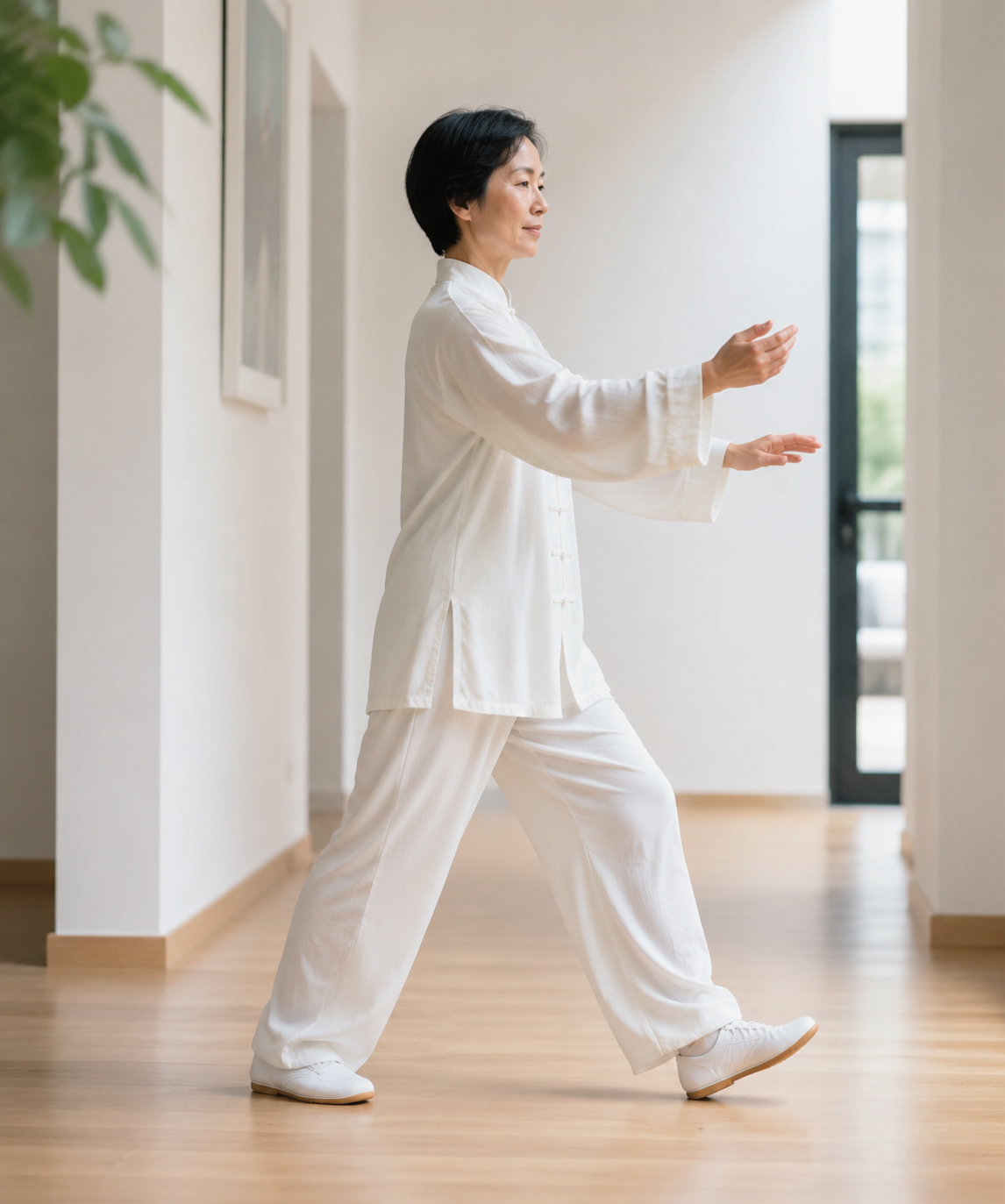
Free Printable Tai Chi Walking Plan
Step-by-step checklist + 7-day starter schedule. Enter your email to download (form placeholder for P0).
What Is Tai Chi Walking?
Tai chi walking (also called tai chi stepping or walking tai chi) is the walking drill extracted from traditional tai chi and practiced on its own. Instead of walking for speed or distance, you move slowly and deliberately: you fully shift your weight onto one leg before the other foot leaves the ground, keep the knees soft, the spine tall, and match each step to your breath.
Many people discover the practice through short social videos and then search “what is tai chi walking” to understand the real method. You may also see misspellings like taichi walking, thai chi walking, or tia chi walking—they all refer to the same slow stepping exercise. The core idea is simple: treat walking as balance training and moving meditation, not cardio.
What is tai chi walking exercise in practice? A session can last ten minutes in a hallway or thirty minutes in a park. Traditional tai chi forms already include careful stepping; what is new for many beginners is practicing the walk by itself—without learning a long form first. That makes it one of the most accessible entry points into tai chi for beginners.
Important note: clinical studies usually evaluate full tai chi programs, not the viral “walking-only” drill. The evidence below describes benefits associated with tai chi and slow weight-shifting practice. Always treat this page as educational information, not medical advice.
How to Do Tai Chi Walking
Follow these eight steps for a safe beginner practice. Move slower than feels natural—control is the skill.
- 1
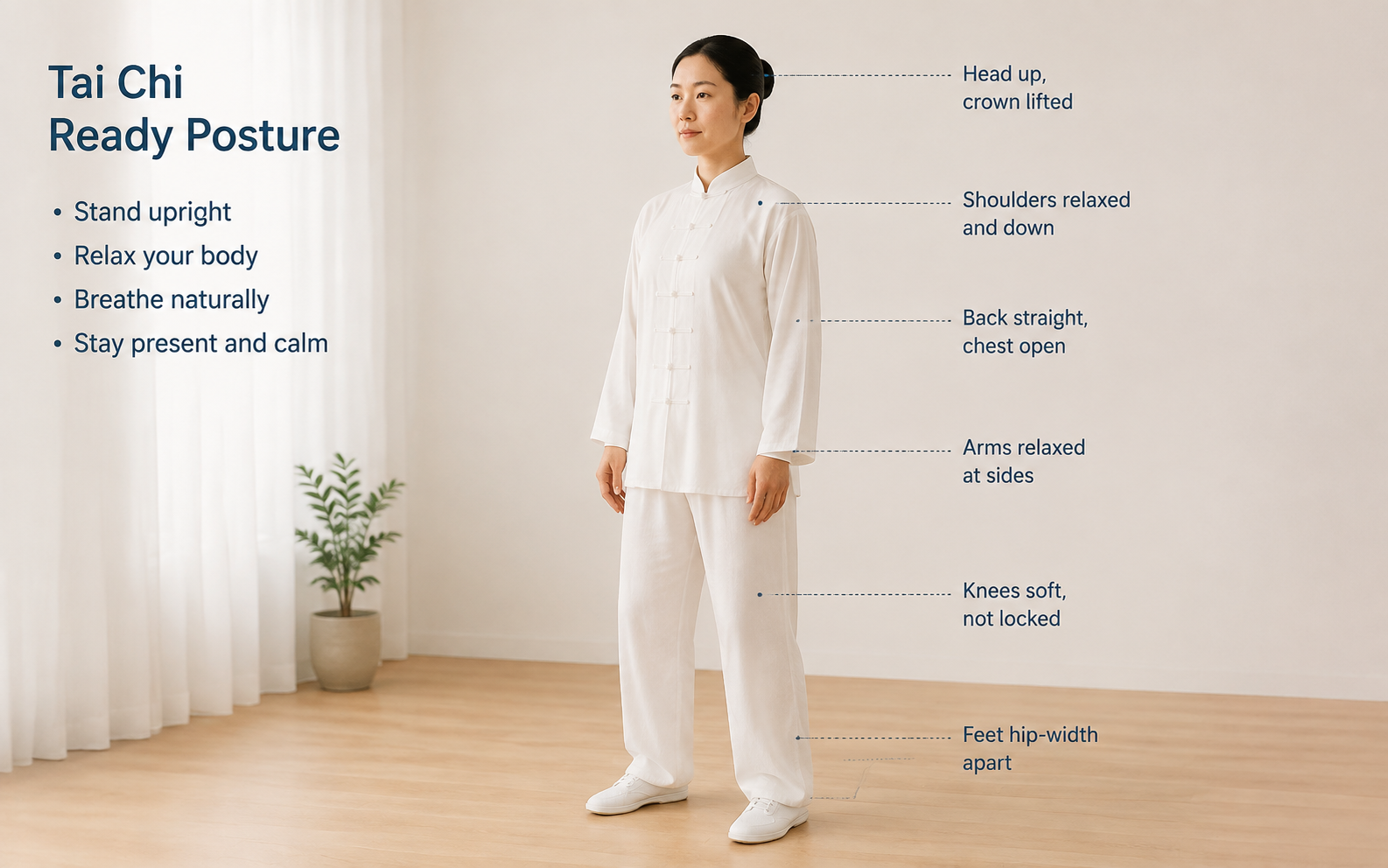
Prepare your space and posture
Choose a flat, non-slip surface with room for 6–10 steps forward. Stand with feet hip-width apart, knees soft (not locked), shoulders relaxed, and the crown of your head gently lifted. Breathe slowly through your nose for 3–5 cycles before you move.
- 2
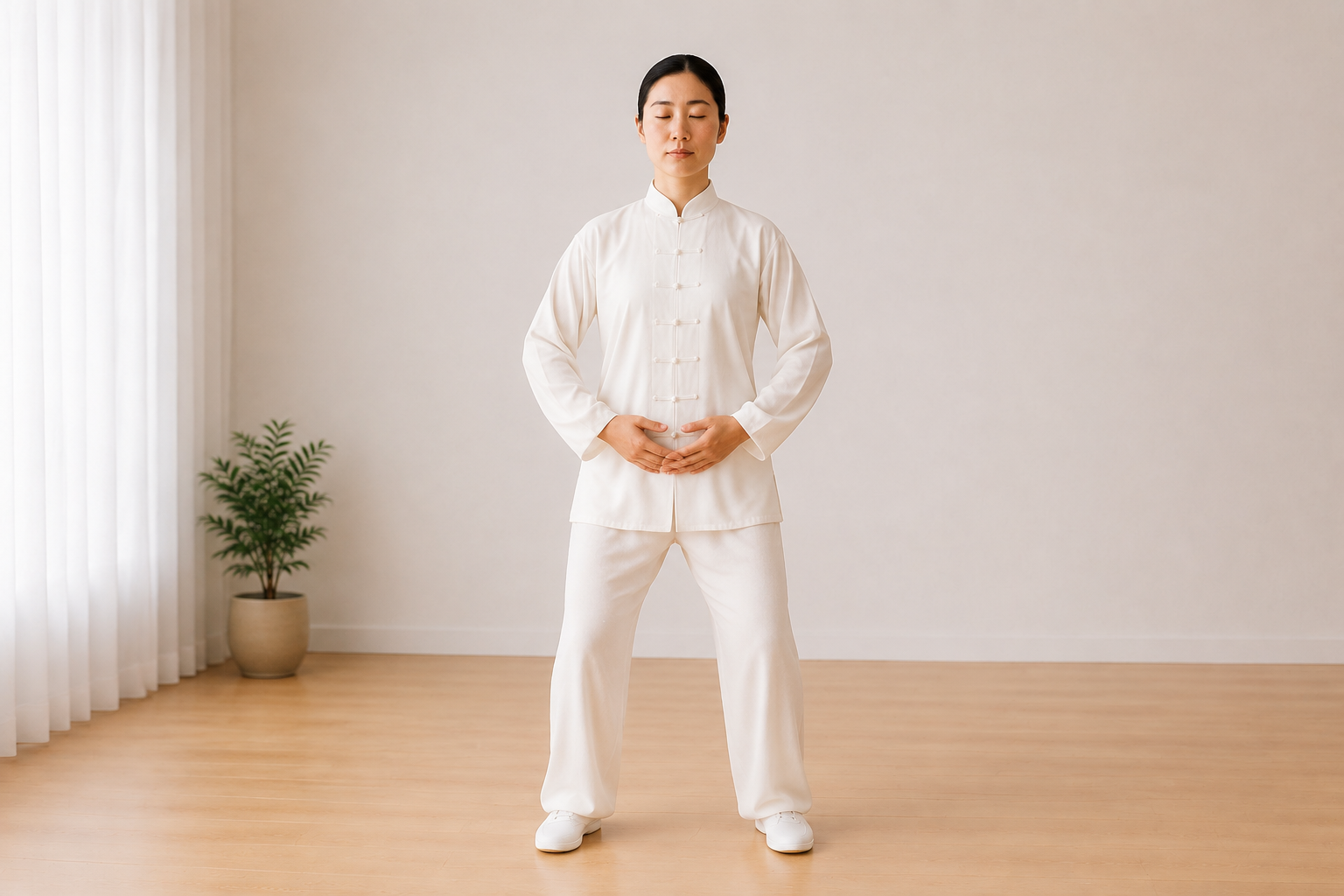
Find your center and soften the knees
Imagine your weight settling into the middle of each foot. Soften both knees slightly so you can shift weight without rocking the upper body. Keep the pelvis level and the chest quiet—movement starts from the legs and hips.
- 3
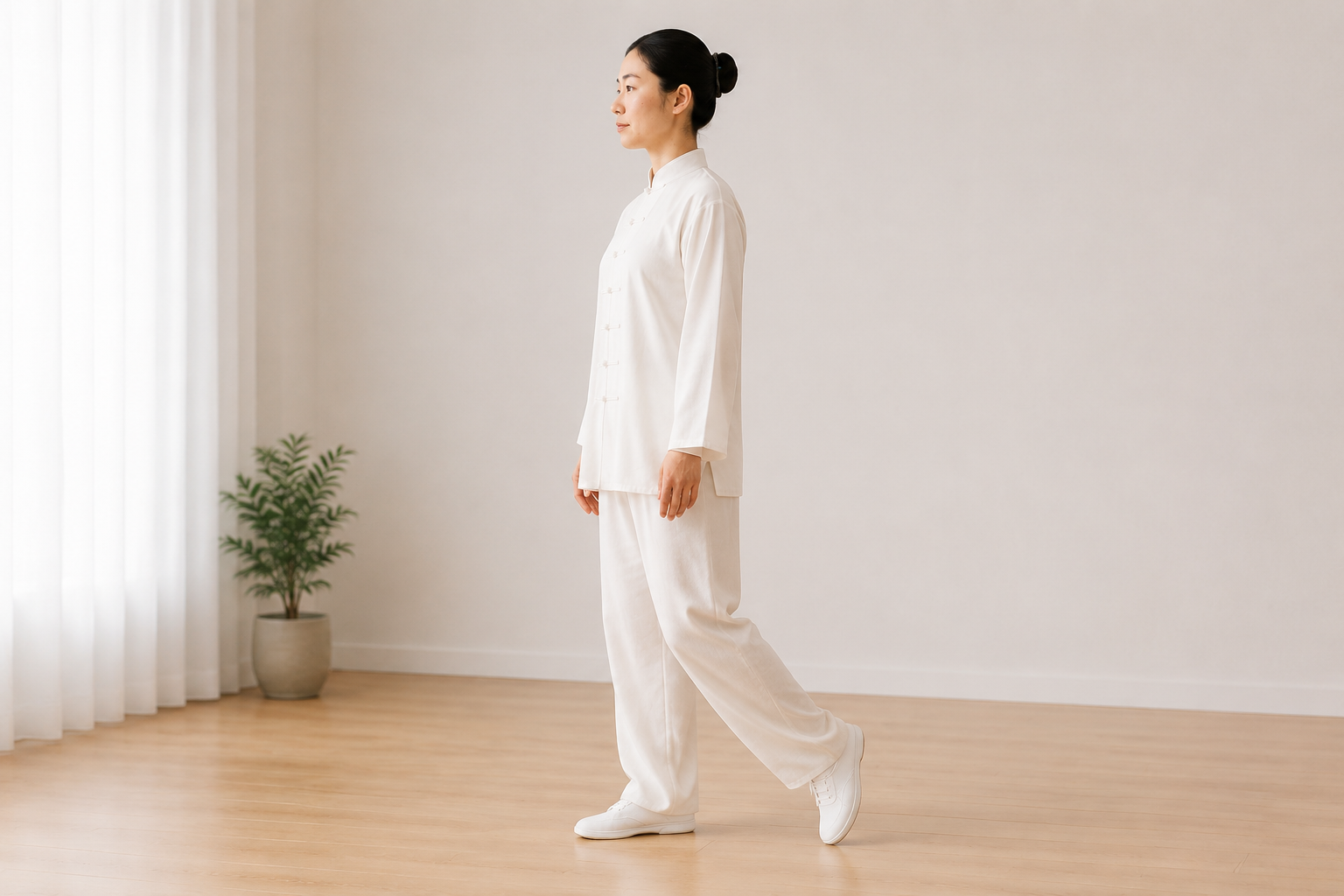
Shift fully onto one leg
Slowly pour your weight into the left foot until the right foot feels light. Pause. Full weight transfer is the heart of tai chi walking. If you tip or rush, restart and move more slowly.
- 4
Lift and place the free foot
Peel the right heel, then the toes, off the floor. Step forward only as far as you can place the foot softly and quietly. Land heel first (or whole foot if balance is limited), then gradually roll onto the foot as weight returns.
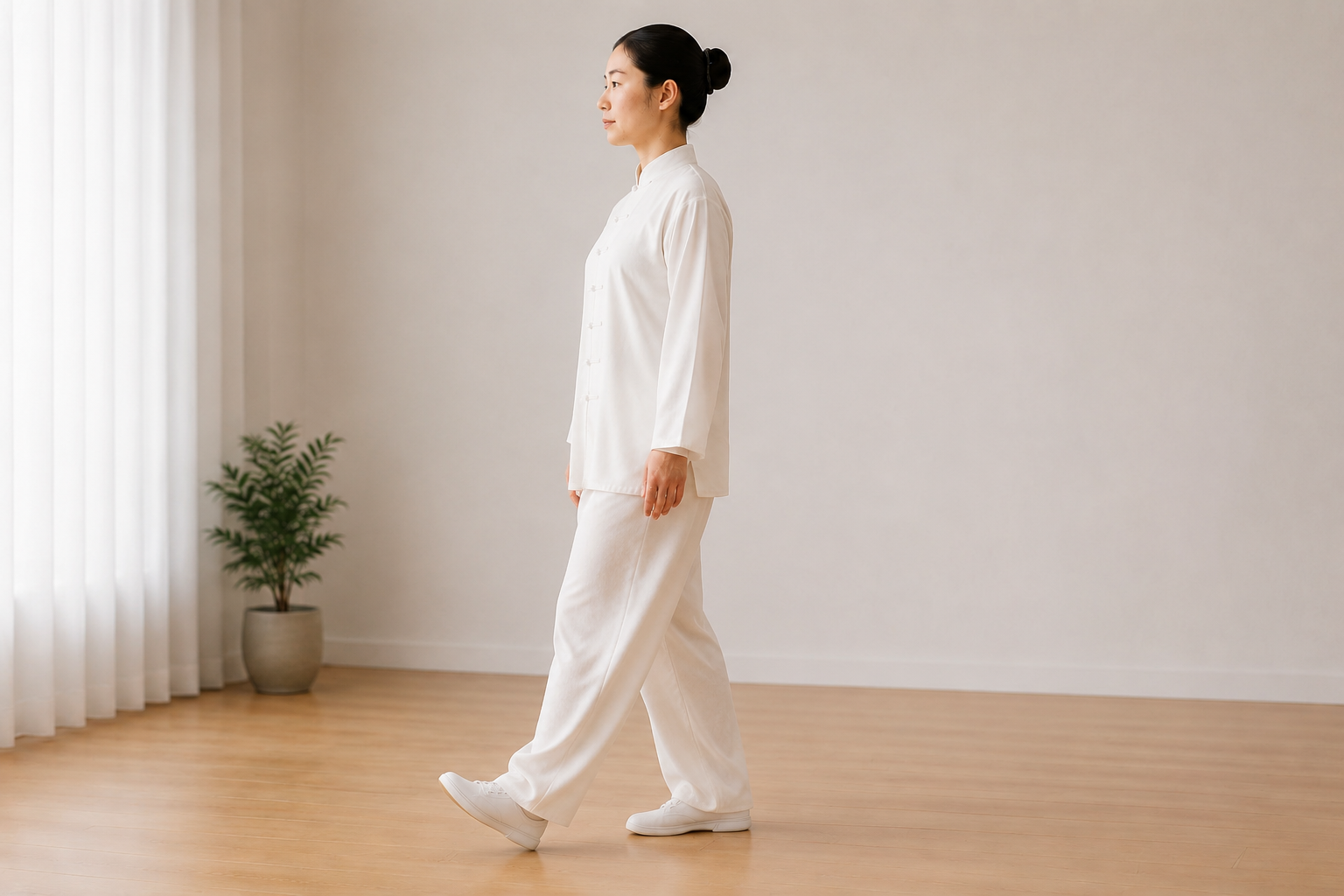
- 5
Transfer weight and empty the back leg
Shift weight onto the front foot until the back foot is almost empty. Then peel the back foot free and bring it forward for the next step. Keep the head steady and gaze soft—looking down at your feet increases tension.
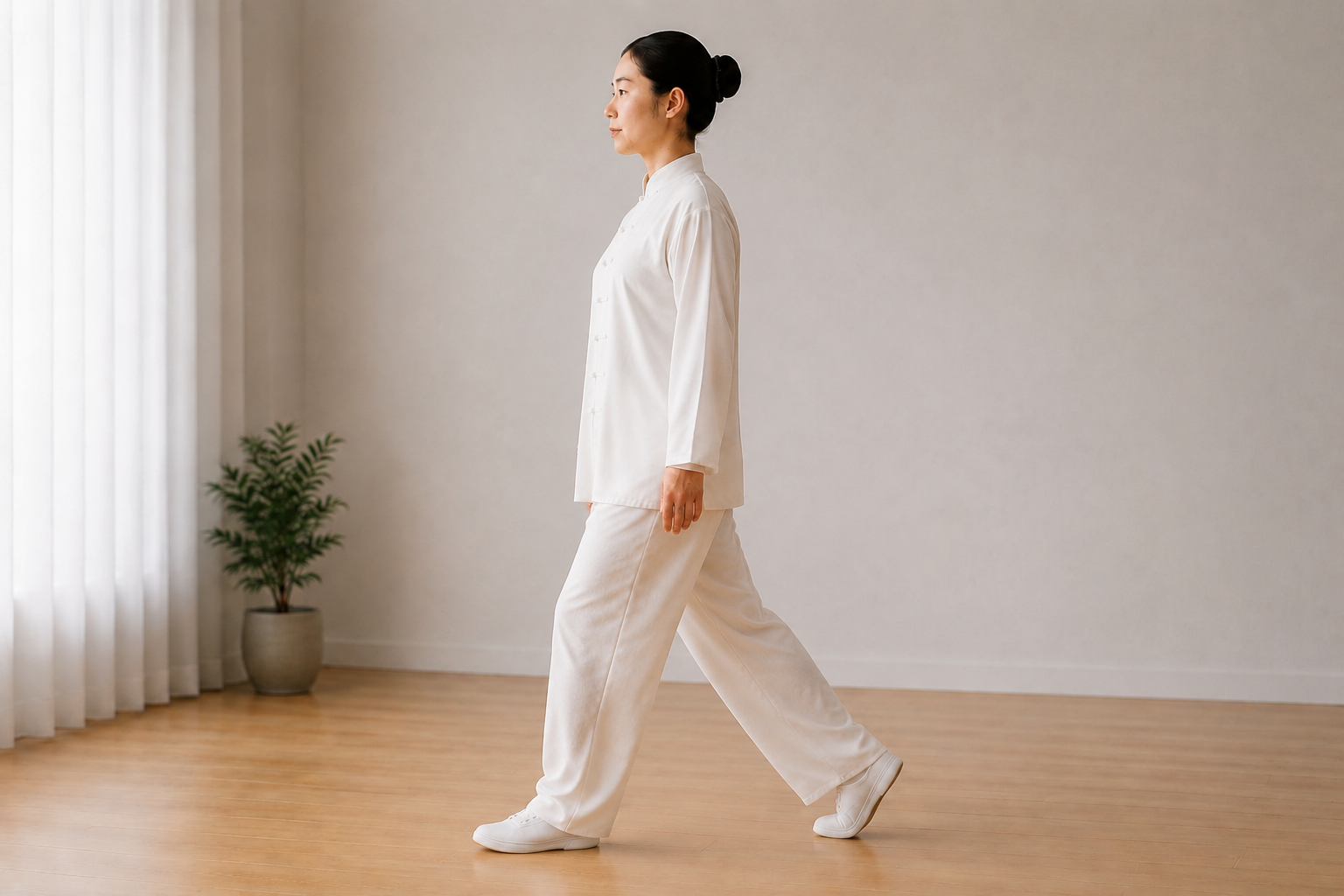
- 6
Coordinate breath with each step
A simple pattern: inhale as you prepare and lift, exhale as you place and settle. There is no single “correct” count—choose a pace you can sustain for 5–10 minutes without holding your breath.
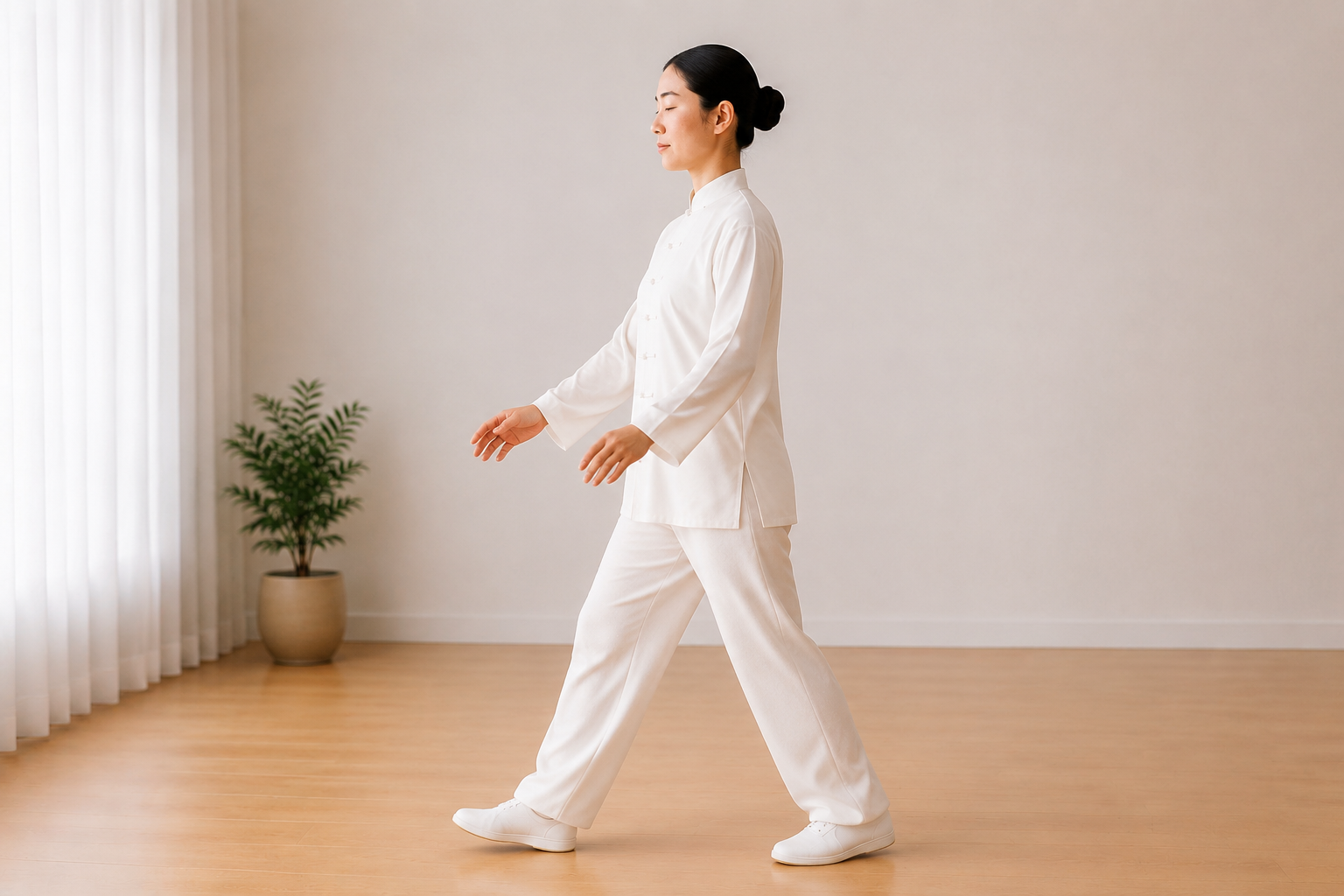
- 7
Turn safely and reverse direction
When you reach the end of your path, stop with both feet under you. Turn by taking small steps in place rather than pivoting on one foot. Then walk back with the same slow rhythm.
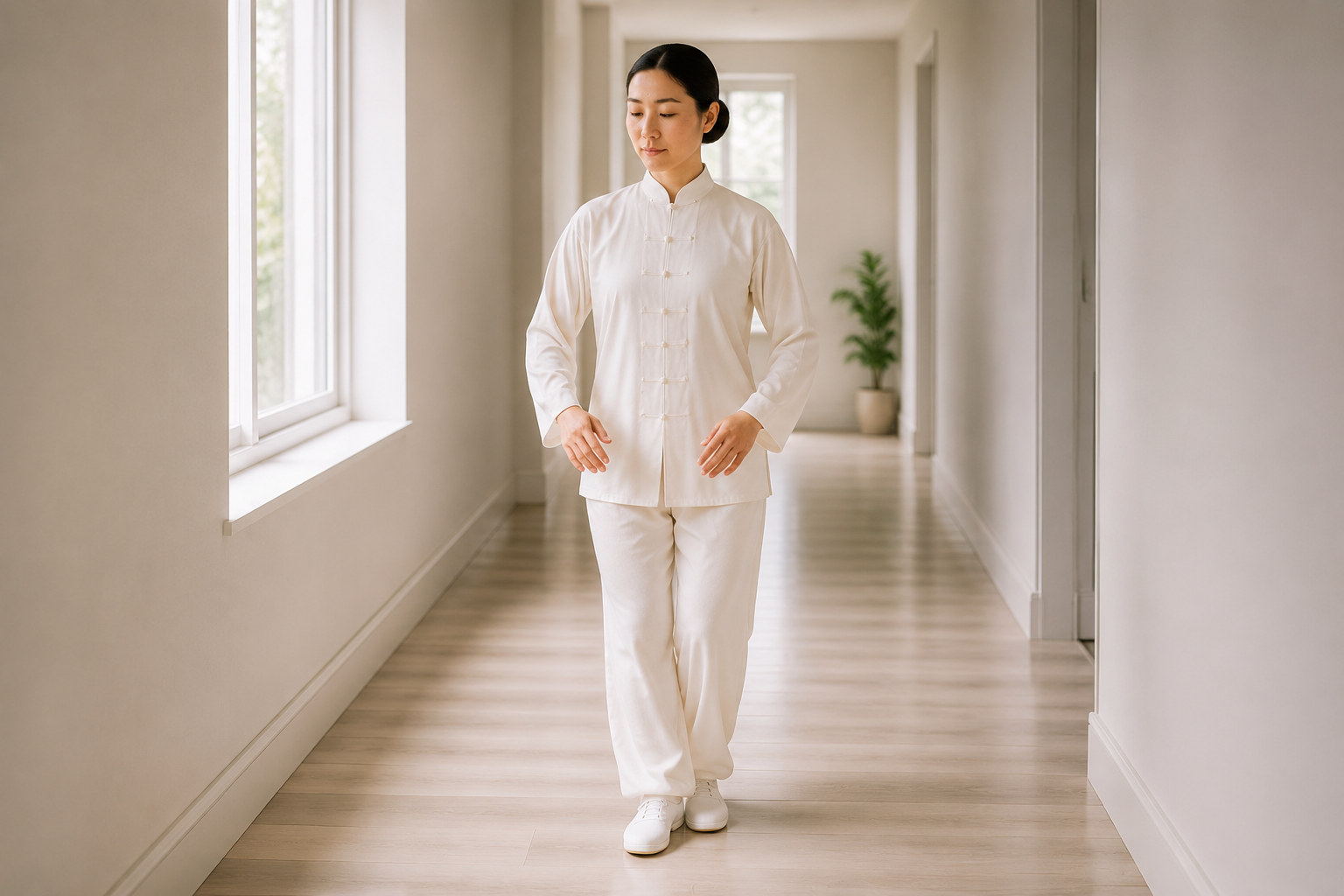
- 8
Finish with stillness
After your last step, stand for 30–60 seconds with soft knees and easy breathing. Notice balance, foot contact, and any tension in the jaw or shoulders. That quiet finish is part of the practice.
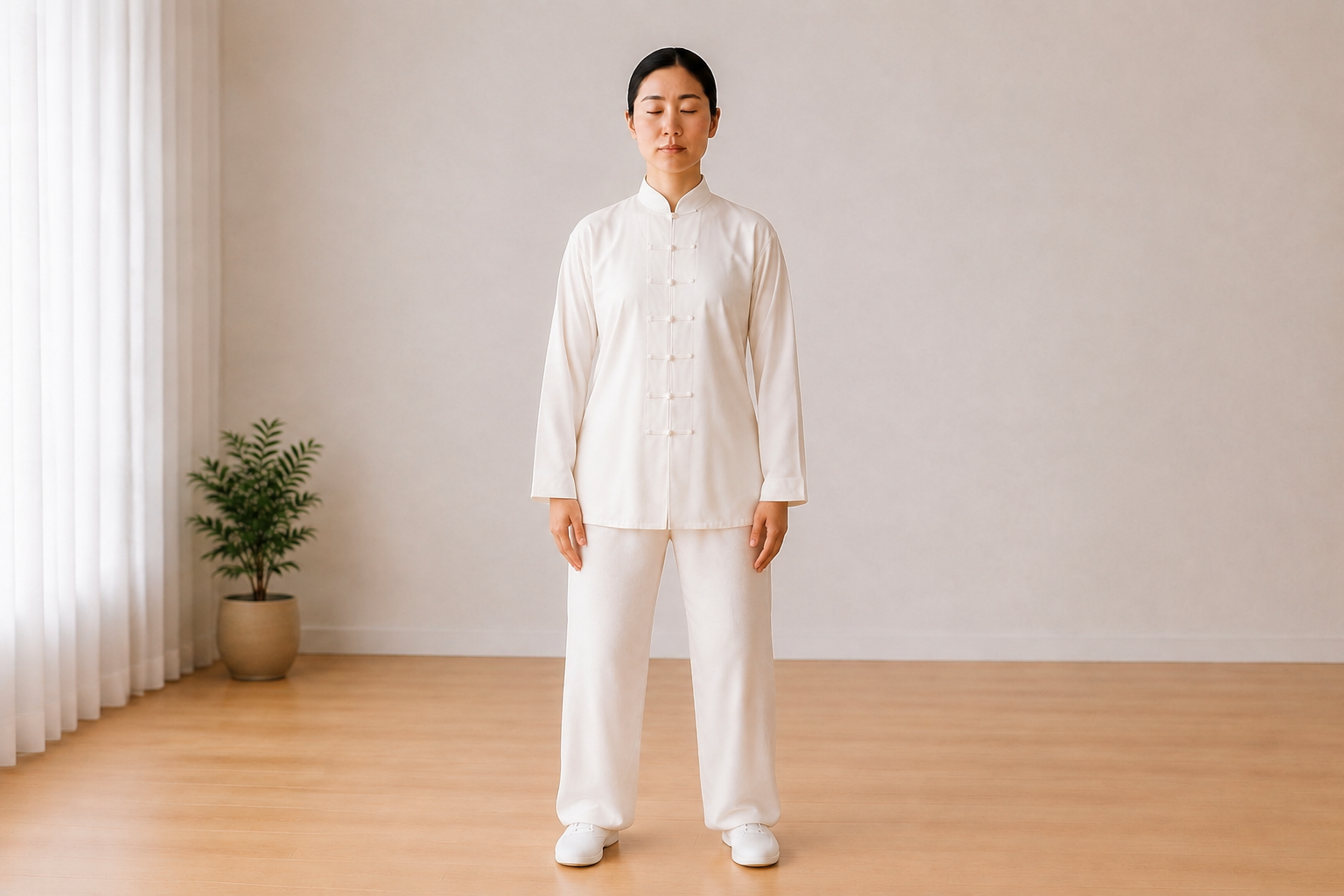
Indoor Tai Chi Walking
Indoor tai chi walking is one of the most practical ways to practice year-round. A hallway, living room, or quiet corridor gives you a flat, predictable surface—ideal when weather, traffic, or uneven pavement would make outdoor walking harder.
Clear the path of cords, rugs, and clutter before you start. Wear flat, supportive shoes or grippy socks on hard floors. Aim for 6–10 slow steps in one direction, then turn with small steps in place rather than pivoting on one foot.
If you are practicing tai chi indoor walking in a small apartment, shorten your stride and focus on full weight transfer instead of covering distance. Even a 10-foot path is enough for a meaningful session.
Older adults who want safety-first indoor routines can also read our dedicated tai chi walking for seniors guide.
Tai chi walking looks nothing like a power walk or treadmill session. The pace is slow—often slower than feels natural—and each step is deliberate. You may appear to be “barely moving” while working hard on balance and control.
Watch for these visual cues: soft knees, upright spine, quiet foot placement, and a brief pause when weight is fully on one leg before the free foot lifts. Arms may hang naturally, float at waist height, or follow gentle tai chi arm patterns—there is no single mandatory arm style for beginners.
The follow-along video below shows what tai chi walking looks like in real time. Use it after you read the step-by-step section so you know what to look for.
What Does Tai Chi Walking Look Like?
Video source:YouTube
Why it helps
Benefits of Tai Chi Walking
Balance and proprioception
Slow, complete weight shifts train your sense of where your body is in space—skills that support everyday walking and stairs.
Calm, low-impact movement
Tai chi walking raises arousal less than brisk cardio. Many beginners use it as a nervous-system reset between desk work and sleep.
Accessible practice space
You only need a hallway, living room, or quiet outdoor path. No gym, no special shoes beyond stable, flat footwear.
A bridge into full tai chi
Once stepping feels natural, it becomes easier to learn standing forms, short workouts, and longer routines with less frustration.
What Research Suggests (Read Carefully)
A 12-month randomized trial in adults with prehypertension found Yang-style tai chi reduced systolic blood pressure more than moderate aerobic exercise (−7.01 vs −4.61 mm Hg).
Source: JAMA Network Open, 2024 (tai chi program, not walking-only)A 2023 meta-analysis of 24 randomized trials found tai chi reduced fall risk in older adults (risk ratio 0.76), with improvements across common balance measures.
Source: Frontiers in Public Health, 2023 meta-analysisYang-style and other slow tai chi approaches emphasize deliberate weight transfer—the same mechanical skill practiced in tai chi walking drills.
Source: Practice principle (clinical trials typically study full programs)
Tai Chi Walking vs Regular Walking
Both are valuable. Choose tai chi walking when your goal is balance and calm; choose regular walking when your goal is aerobic fitness or transportation.
| Aspect | Tai Chi Walking | Regular Walking |
|---|---|---|
| Pace | Slow, deliberate, often meditative | Natural or brisk walking pace |
| Weight shift | Fully onto one leg before stepping | Continuous, overlapping contact |
| Primary goal | Balance, awareness, calm | Distance, fitness, transport |
| Breathing | Consciously synced with steps | Usually automatic |
| Space needed | Short path or hallway is enough | Often outdoors or longer routes |
Free Tai Chi Walking Plan (Starter Week)
Use this 7-day outline as a printable checklist. Keep sessions short if balance feels unstable, and stop if you feel dizzy or unsafe.
- Day 1–2: Learn posture and full weight shifts in place (5 minutes).
- Day 3–4: Walk a short hallway: 6–8 slow steps each direction (8–10 minutes).
- Day 5–6: Add breath coordination and quiet foot placement (10–12 minutes).
- Day 7: Combine into one continuous 15-minute session; finish with 1 minute of stillness.
Looking for a seniors-focused guide?
If you want extra safety tips, shorter progressions, and indoor options designed for older adults, see ourtai chi walking for seniorsguide.
Curious about weight loss? Readtai chi for weight lossfor realistic calorie expectations and how walking fits in.
FAQ
Frequently Asked Questions
What is tai chi walking?+
Tai chi walking is a slow stepping practice taken from tai chi. You fully shift weight to one leg before moving the other foot, keep the knees soft, and coordinate each step with your breath. It is often practiced as a standalone drill for beginners.
Does tai chi walking work?+
For balance, calm, and gentle daily movement, many people find it works well when practiced consistently. Clinical trials usually study full tai chi programs—not the short walking drill alone—so evidence for “walking-only” claims is limited. Treat viral before-and-after stories with skepticism; use this practice as mindful movement education, not a guaranteed fix.
Is tai chi walking legit?+
Yes—the stepping method comes from real tai chi training, even if social media simplifies it. What is often overstated online is how quickly or dramatically it will change your health. Legitimate practice is slow, controlled, and repeatable; gimmicky “speed” versions are not traditional tai chi walking.
Does tai chi walking really work for balance?+
Slow, complete weight shifts are a proven training method for balance skills. Published tai chi trials show fall-risk and balance improvements in older adults, though those studies use structured programs rather than hallway drills alone. Start short, practice often, and add wall support if needed.
Is tai chi walking a real thing?+
It is real in the sense that tai chi forms include deliberate stepping, and instructors have long drilled those steps separately. The “tai chi walking” trend is a modern, accessible packaging of that skill—not a separate martial art, but a valid beginner entry point.
How do you do tai chi walking for beginners?+
Start with soft knees and upright posture. Shift all your weight onto one foot, step forward quietly with the free foot, then transfer weight fully before lifting the back foot. Move slowly enough that you never tip or rush. Practice 5–10 minutes at first.
What is tai chi walking for seniors?+
The same slow stepping method can be adapted for older adults with shorter sessions, wall support, and extra safety checks. We cover seniors-specific guidance—including indoor routines and fall-prevention tips—in our dedicated tai chi walking for seniors guide.
Is tai chi walking good for weight loss?+
Tai chi walking burns fewer calories than brisk walking or running because the pace is slow. It can still support weight goals as part of an active lifestyle and stress management. Read our article on tai chi for weight loss for a realistic look at calories, expectations, and how walking fits in.
How is tai chi walking different from regular walking?+
Regular walking is continuous and often goal-oriented (distance or speed). Tai chi walking emphasizes complete weight transfer, slower pacing, and mindful breath. You cover less ground but train balance and awareness more deliberately.
Can I practice tai chi walking indoors?+
Yes. A hallway, living room, or quiet corridor works well. Clear obstacles, wear stable shoes or grippy socks, and turn with small steps rather than spinning on one foot. See the Indoor Tai Chi Walking section above for a full setup guide.
How often should I practice?+
Most beginners do well with 10–15 minutes, 4–6 days per week. Consistency matters more than long sessions. Increase time only when your balance and breathing feel steady.
Do I need special shoes or equipment?+
No. Flat, supportive shoes or barefoot practice on a safe surface is enough. Avoid thick, unstable soles. You do not need weights, poles, or a gym membership.
Free plan
Get the Free Printable Tai Chi Walking Plan
Enter your email to unlock the starter checklist and weekly schedule. Download starts immediately.
We respect your privacy. Your download starts right after a valid email.
This page is for informational purposes only and is not a substitute for professional medical advice. Consult your healthcare provider before starting any exercise program. Prefer a timed routine instead?Try our tai chi workoutor browsetai chi exercises.